Sunday, September 23, 2018

Economic development or Heritage for posterity?


Zimbabwe is a developing country in the southern part of Africa which is popularly known for its cultural heritage masterpiece ‘Great Zimbabwe’ world heritage site. The name Zimbabwe is a native language word for a big ‘House of Stone’, this also implies the richness the nation is, in terms of heritage. This then clarifies how important heritage should be to the citizens of the country because Zimbabwe is the sense of everyone’s identity and nationality. To some, Great Zimbabwe is a focal rallying point whilst to others it is a national shrine for religious rituals therefore. Heritage, as opined by Lowenthal, is important to all humans who in turn should husband, transmit and protect it. 

Great Zimbabwe 
Conversely, the nation is economically facing a recession and as a result, developmental initiations contravene heritage management policies. Controversial situations are always rising due to the lack of clear guidelines on pre-requisites for developmental projects at a national level. This has subsequently led to the loss of archaeological heritage and disturbances on intangible heritage. An example of a sacred hill called Sviba within the buffer zones of Great Zimbabwe would best suit the context with which I am concerned about. A telecommunications booster was erected in this sacred hill of Sviba without having done archaeological impact assessments prior such a development and hence burials were disturbed during the process. The responsible authorities were only informed of such a development because burial remains were discovered, heartbreaking this is. 

Zimbabwe has rapid infrastructural and land developments which are mostly in contrast with sustainable management of heritage property. Another example is of the Tokwe-Mukosi dam which was constructed in Masvingo province where Great Zimbabwe world heritage site is. (pic 2 below showing constructed dam)

Tokwe Mukosi

This led to loss of numerous archaeological heritage and to me it so happened because Zimbabwe does not have a clear policy for development-led archaeology. Lowenthal has opined that whatever burdens, a heritage can be it can never be unused: and he further noted the need to respect, accept, husband and transmit it.

These damages on heritage which result from the need to economically develop land for economic growth has triggered my concern to advocate for the preservation and maintenance of heritage for posterity in Zimbabwe. From my observations and analysis of heritage management policies and economic/environmental policies, the relations are not cordial but rather environmental and economic concerns override those of heritage protection. Without a blueprint to determine who is responsible for the heritage impact assessments, the nation will soon mourn most of its heritage. In fact, amateur heritage managers will continue to emerge from out of the blue and recommend the developmental projects to progress just so they receive their wages for the job done.

As a heritage manager in making, with a little experience in the practical field of heritage management I have embarked on this journey. This challenging journey to legally represent and protect the endangered heritage of my precious motherland Zimbabwe is not easy but I have come too far to be intimidated already. Taking an active and supportive role to conscientise all that know me about this need to speak out and save our heritage. Economic development or heritage for posterity? I choose sustainable use, development and inter-generational equity for our common identity, heritage.

Reference;
Lowenthal, D. e.d (1998) The Heritage Crusade and the Spoils of History.
Ndoro, W.  (2005) The Preservation of Great Zimbabwe. Your Monument our Shrine. ICCROM
Picture 1 taken by blog author


Lost and (Eventually, Hopefully Soon) Found | Nadya Bogdanova

On the 30rd of August I arrived in Budapest, a city which I never thought would be my home for an extended period of time. But here I am: creating personal memories and coming up with stories to tell while also adjusting my expectations to the reality faced, reinventing daily routines, walking the streets of the Hungarian capital, trying to make them my own and - quite often - getting lost. Not only geographically (how hasn't Google come up with maps for minds yet?!). 

My research proposal was about my intention to develop a rebranding strategy aimed at promoting the Buryat language, one of the indigenous languages of Russia that is currently on the list of definitely or severely endangered depending on the region (according to the UNICEF Atlas of the World's Languages in Danger)

The Buryat People in their national attire
The Buryats are the largest minority group living in Siberia on the shores of Lake Baikal, and the Buryat language has the official status in the Republic of Buryatia. Despite its status, it is classified as definitely or severely endangered according to the UNICEF Atlas of the World's Languages in Danger. 

The official data of Russian Census of 2010 tells it all: the number of ethnical Buryats living in the Republic of Buryatia and speaking the Buryat language was 122882 out of 286839 people which makes it less than 50% (with 281 916 individuals declaring the knowledge of language). The statistics becomes even more shocking when it is compared to the Census of 2002. With all the inaccuracies and errors kept in mind, it can be stated that the situation had only worsened: in 2002, 222107 individuals of Buryat ethnicity stated that they speak the Buryat language (out of the total of 272910 people identifying themselves as Buryat living in the Republic of Buryatia). 

It is a bleak picture, and so my motivation is quite clear. Being a representative of the Buryat people and strongly identifying myself as one, I feel my personal responsibility in making things better. As a professional linguist, educator and media specialist, I still believe that it’s possible. 

When writing my proposal, I had a clear picture of how to do this. First, I was going to use the existing scholarship, analyze available quantitative data, deal with results of questionnaires and polls, use text analysis and other methods – to outline the main problems that the situation with the Buryat language presents. Then I was to draw conclusions on the current situation and single out actual reasons for the lack of visible success in reviving the Buryat language. After that I thought it necessary to compare the obtained results with cases of other regions and countries and see how those problems were solved there and which measures proved to be effective. The final point of my project was to adapt these measures to the reality of the Republic of Buryatia and come up with a relevant management plan which would deal not only with governmental policies but also involve working with media, culture organizations and educational institutions. 

It seemed so clear and well-structured. 

However, now with all kinds of new information piling up on us through lectures, readings, talks with professors and fellow students, I realize that there is so much more to do and decide on. Is my project too ambitious? Is it even relevant? Are those methods that I chose back in January even appropriate for reaching the research objective? Should I just concentrate on something more tangible than a language? 

So, you see. A lot of anxiety. Frustration. And loneliness.


Luckily with every day passing it feels less and less alone to be lost. We are all in it together. And as a lone traveler follows the sun to find the way, we will find ours soon. 

References:
1. UNESCO Atlas of the World's Languages in Danger. Retrieved November 20, 2017, from http://www.unesco.org/languages-atlas/
2. Russian Census, 2010. Retrieved November 20, 2017, from http://www.gks.ru/free_doc/new_site/perepis2010/croc/perepis_itogi1612.htm
3. Russian Census, 2002. Retrieved November 20, 2017, from http://www.perepis2002.ru/index.html?id=17


Saturday, September 22, 2018

In search of a way to begin | Zsuzsa Nagy-Sandor


The scene: a bedroom somewhere in Budapest, furnished but as of yet, unadorned. In the middle of the room: a suitcase. Open, piled high, heaving with unfolded clothes. Smaller objects scattered across the shiny wooden floor. All evidence of a recent move. The start of something new. Unorganized. A mess. Just like my thesis proposal.

When writing my application I carefully considered my interests, pinpointed my goals and objectives and wrote a few pages of text, neatly organized and to the point. Later in the year I packed my luggage in much the same way. Neatly and organized.

And then I arrived and the year started with a whirlwind of orientations, classes, new impulses, inspirations, assignments… and suddenly here I stand, clothes flung in all directions, the exciting terms I based my proposal around just sitting there, on my proposal paper, are all jumbled up and unorganized in my brain, each term tangled with the next and I am not sure what to reach for first.

The research proposal I am currently working with revolves around different concepts of heritage interpretation, focusing mainly on the tools museums can utilize to communicate with their audiences in a participatory and interactive manner. Back in January I had written the following sentence to sum up the what I thought would be the main subjects of my research: “Looking more practically at how museums can implement inclusion and aid understanding through interpretation (as defined by Tilden 1977: 8), the study must consider the specific ways and tools of showcasing heritage and living culture (see e.g. the Smithsonian Folklife Festival in Washington DC) as well as developments in participatory museum practices and museum educational interpretations.”

However, the concept is both vague and vast, it is unspecified.

Several keywords can be distinguished however: inclusion, interpretation (including presentation), participatory museum and museum education. I talk about tangible and intangible cultural heritage. About traditional museum settings and events organized outside the museum buildings. I write as if I knew exactly what I would like to research and how I would go about doing it, but her and now I am lost.

I find my thoughts running around in desperate circles, trying to find the loose end of the ball of yarn that is this thesis, and unravel it in a meaningful and graceful fashion. That is I am struggling to learn about all these concepts I had laid out for myself, as they are all intertwined and I am not sure where to start and which one to begin with. As I am starting to realize, this particular ball of yarn has no single neat and accessible starting point, but a thousand threads to untangle it by – and here the metaphor looses all meaning.

Bakony, Balaton-felvidék utcasor - http://skanzen.hu/hu/szolgaltatasok/fotozas-filmezes/forgatasi-helyszinek-kepek


So I am looking for a way in; a way to broaden my knowledge while simultaneously defining the area of research, narrowing it to a feasible and specific project, to lay the foundation based on which research can be planned. 

I will begin this work by choosing a specific heritage site as a tangible example through which I can understand the different concepts and approaches I am interested in. To this end, the Hungarian Open Air Museum of Szentendre will be my playground to explore approaches in interpretation, community involvement and participation. 

The museum was opened in 1972 and has taken a leading role developing participatory museum education in Hungary. It was at this institution that the Museum Education andMethodology Centre (MOKK) was established in 2006. The center organizes museum pedagogical workshops, trainings and publishes the journal Múzeumi Iránytű (Knowledge Archive). Investigating into know the center and the work it does will no doubt land me in the thick of it all, but in a graspable, contextualized manner.

The site itself will be a good place to start applying the analytical methods I learn, as it works with heritage I am familiar with, allowing me to focus on the narratives and presentational tools employed. The site will serve as a reference point. It will be an example for me to keep returning to when reading theories and learning to analyze heritage sites.

In the end, I am taking a threefold approach to orienting myself within the field and finding my research subject within it: 1) I will learn its terminologies and approaches through readings and explorations of heritage institutions/sites, based upon which I will 2) choose a direction I would like to take my research in, so that I can 3) choose a project (format) and begin my thesis-specific research. This is my grand plan.

I have my ticket, I am going to Szentendre soon, armed with Lars Wohlers’ book on how to successfully present cultural and natural heritage, a notebook and a camera. I am ready to analyze, to take visual and written notes.

This is me, trying to take one step at a time. 

It’s time to begin detangling my keywords. 

It’s time to unpack my suitcase.


References

Lars Wohlers (2015) Informális oktatás: hogyan mutassuk be sikerrel kulturális és természeti örökségünket. Budapest: Kulturális Örökség Menedzserek Egyesülete (KÖME).

Tilden, F. (1977) Interpreting Our Heritage. Chapel Hill: University of North Carolina Press.

Friday, September 21, 2018

Rethinking people in the site | Tingchao Chang

Since the time I handed in my project proposal for applying CEU, it has been 9 months. During these months, I travelled much, and even had the interview of application in a B&B of Chile. Although I didn’t spend much time on academic work these days, to my surprise, the sense to the previous studies and prospective possibilities recurs to me. Going through all the syllabi and requirement of each courses, my passion to those work and ideas recovers gradually. For writing this post, I reread the project proposal I had written, and I’m going to share some of idea among it.

The topic of my proposal is “An Ethnographic Perspective on Heritage Construction as a Place-Making Process – the case of Dong Villages”. I guess it’s quite abstract for most of you. Actually, I myself consider it a tongue twister with too many academic words too. However, when I examine every word one by one, I think they are all necessary to express my complete idea, including the statement, the method and the object. Later, I’d like to explain the concepts in the back of every phrase of the title in sequence. It can be divided in to 4 parts.

Dong Villages in Fall (Zhanli, Guizhou)

Ethnographic Perspective


I studied geography and anthropology in my undergraduate study. Whether in human geography or cultural anthropology, ethnography is a common method to find questions and solve them. Its spirit lies in the emphasis of “fieldwork” requiring “participant observation” and “deep description” to discover the object’s culture system, including socioeconomic and politics, etc., in a holistic way. It’s very different to scientific methods in other subjects. In ethnographic perspective, everything is connected to other things, so that it’s important to record all of them and then organize them into a structure or interpretation. Although the epistemology and methodology of ethnography shifts very frequently and is always under debate, it is still widely and generally used in anthropological research.

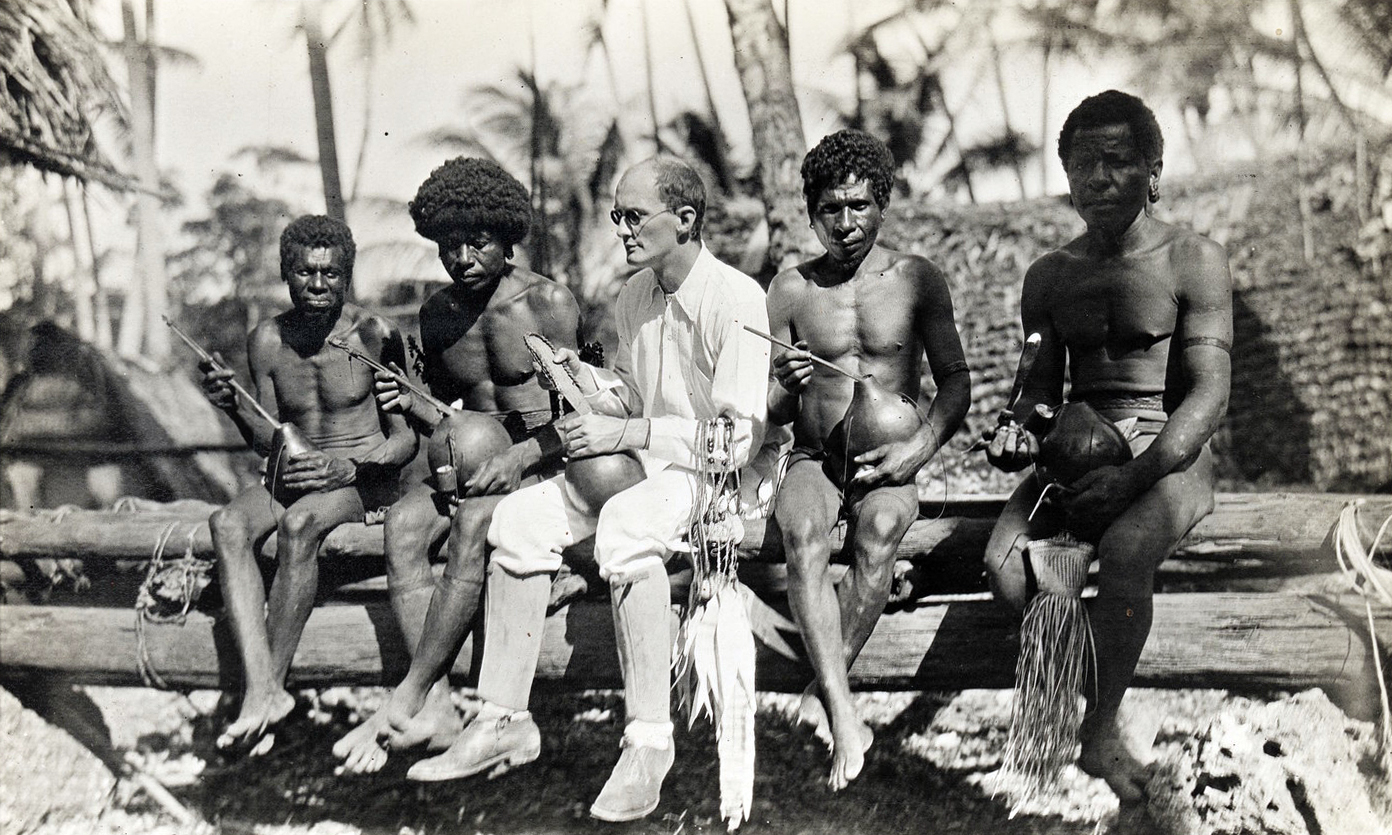
Bronisław Malinowski, co-founders of ethnography, and the natives
in Trobriand Islands when he was doing his first ethnography

Heritage Construction


When we are discussing heritage, we should always stick to the definition and meaning of heritage, namely, something important that worth passing down to future generations. So, how do we decide whether something is important or not? It might be the consensus of many people, but also the creation of any institution, like the state. The state uses the construction of heritage to build identities of different scales, to symbolize policy, to gentrify local communities or to promote tourism. When a place becomes a heritage, what happens to it? By entering the community (the ethnography method I just mentioned), I’d like to know how the village transforms and reacts to respond and reconstruct external ideas and acts, especially the notions about history, identity and nation-state. Does the state succeed or fail? Does the local community develop as the state’s expectations? These will be the main issues I want to talk about in my research.

Place-Making Process


This part might be the most abstract part of my topic, but it’s actually the most relative part to everyone. Place-making is a popular term in the field of cultural geography. It tries to answer the question: how do we perceive somewhere as a place? The scale can be as wide as a globe, or as tiny as a home. World Heritage is a worldwide system attempting to record local places such as villages, towns or cities through national institutions, which is an ideal object to observe it. The flow of knowledge, power and capital together forms the dynamic process of place-making. In the past, the place is easier to be created only by the local, but in the contemporary world, no place can be excluded from other places, making the process more complicated and sophisticated. Finding every stake holder’s needs while setting aside the binary opposition of internal/external and state/local are the latest ideas to rethink the place.

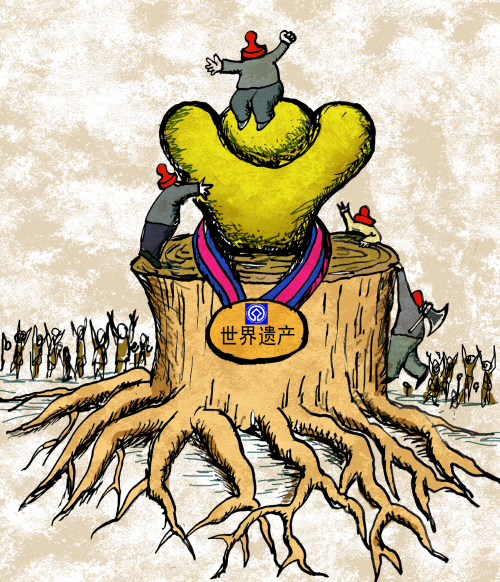
Ironic illustration of shen-yi-re, a term used in China to
describe the insanity of governments to nominate world heritage sites

The Case of Dong Villages


I choose Dong Villages as my field mainly because, its nomination procedure to be enlisted in world heritage is the fastest ones among all the ethnographic villages in China. It’s already on the tentative list since 2013. Word has it that Dong villages might be sent to the committee in 2020, but it’s still under discussion after all. Through the case of Dong villages, there will be some specific phenomena I can focus more on:

1.      Ethnic relationship between the majority, Han and the minority, Dong, including the differences of languages, traditions and customs

2.      Stratification of local, provincial and central government and how the concepts and knowledge flow between them

3.      Additional tourism, infrastructure, and transportation construction for transforming from a rural area to an urbanized area.

4.      Ways how traditions be preserved, exhibited, represented as a heritage and locals’ acts to it

These are the ideas I have so far and, actually, it doesn’t change a lot from my original proposal. Of course, just as everyone does, I hope this can be smoothly conducted in the following days. It looks like that my research will be the most academic one among all of ours, maybe because I didn’t leave university for long. Actually, I continue this program just after I obtained my bachelor degree. I don’t have much practical experience in this field, and, in contrast, feel interested in digging into new academic discourses and findings. I try to apply my studies in geography and anthropology to my further research, and what always comes to my mind is people in the site.


Aerial photography of Guandong, Guangxi

Links